


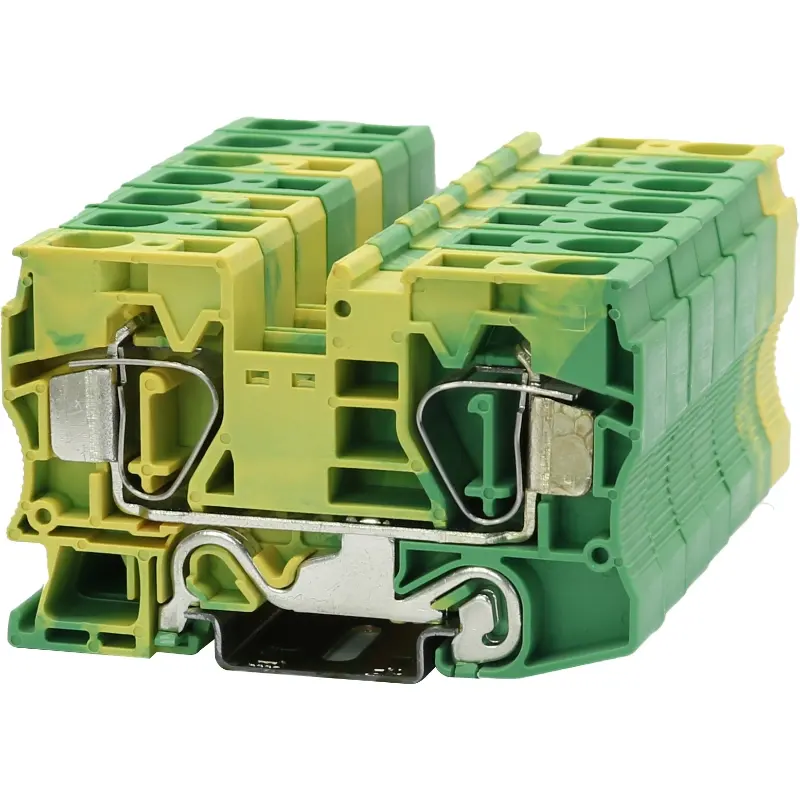
Los bloques de terminales de riel DIN son un componente crítico en los sistemas eléctricos industriales, ya que proporcionan una terminación y distribución de cables fiable dentro de los paneles de control. Sin embargo, el sobrecalentamiento es un problema común que puede provocar un rendimiento deficiente, fallos del sistema o incluso peligro de incendio. Comprender las causas del sobrecalentamiento y cómo prevenirlo es esencial para ingenieros, electricistas e integradores de sistemas que buscan instalaciones seguras y eficientes.
1. Mal contacto entre el conductor y el terminal
Causa
Una conexión floja o inadecuada entre el conductor y el bloque de terminales aumenta la resistencia de contacto, generando calor bajo carga.
Cómo solucionarlo
- Asegúrese de que el conductor esté correctamente pelado a la longitud correcta.
- Utilice el valor de torsión correcto en los tornillos o abrazaderas según las especificaciones del fabricante.
- Para cables trenzados, utilice casquillos adecuados para mejorar el contacto y reducir la resistencia.
Consejo: Las herramientas de calibración de torque deben usarse periódicamente para lograr un ajuste uniforme.
2. Tamaño o tipo de cable inadecuado
Causa
El uso de un calibre de cable demasiado pequeño para la carga actual o un tipo de conductor incompatible aumenta la resistencia y la acumulación de calor.
Cómo solucionarlo
- Seleccione siempre bloques de terminales aptos para el tamaño y la corriente de cable específicos.
- Haga coincidir los tipos de conductores (sólidos o trenzados) con el diseño del terminal.
- Para cables de hilos finos, utilice casquillos o conectores con resorte para lograr un mejor contacto.
3. Superar las clasificaciones actuales
Causa
Los bloques de terminales tienen valores nominales de corriente definidos. Superarlos provoca un calentamiento excesivo debido a la sobrecarga del conductor y del conector.
Cómo solucionarlo
- Verifique la clasificación actual del bloque de terminales antes de realizar la selección.
- Divida los circuitos de alta corriente entre varios bloques de terminales si es necesario.
- Considere modelos de bloques de terminales de alta corriente o de servicio pesado para cargas más grandes.
4. Vibración o estrés mecánico
Causa
Las vibraciones de la maquinaria, los motores o el movimiento frecuente pueden aflojar las conexiones con el tiempo.
Cómo solucionarlo
- Utilice diseños de bloques de terminales resistentes a las vibraciones, como terminales de resorte o de tornillo con arandelas de seguridad.
- Inspeccione y vuelva a apretar periódicamente las conexiones en entornos de alta vibración.
- Utilice topes finales de riel DIN y accesorios para asegurar los conjuntos de terminales.
5. Corrosión y factores ambientales
Causa
La humedad, el polvo, los productos químicos y la humedad alta pueden corroer los contactos de los terminales, aumentando la resistencia y la generación de calor.
Cómo solucionarlo
- Seleccione bloques de terminales con el tamaño adecuado Clasificaciones IP para su entorno.
- Utilice cubiertas protectoras o bloques de terminales sellados en condiciones adversas.
- Los programas de mantenimiento regulares deben incluir inspección para detectar corrosión y acumulaciones.
6. Mala distribución del panel o disipación del calor
Causa
Las filas terminales demasiado juntas o una ventilación inadecuada impiden que el calor escape de manera eficiente.
Cómo solucionarlo
- Coloque los bloques de terminales en el espacio adecuado para permitir el flujo de aire.
- Utilice diseños de riel DIN que favorezcan la disipación del calor.
- Si es necesario, considere ventilación forzada dentro de los paneles de control.
7. Herramientas de torsión inadecuadas o instalación incorrecta
Causa
El uso de destornilladores dinamométricos no calibrados o técnicas de montaje inadecuadas da como resultado una fuerza de sujeción inconsistente, lo que genera puntos calientes.
Cómo solucionarlo
✔ Invierta en herramientas de torsión calibradas diseñadas específicamente para la instalación de bloques de terminales en riel DIN.
✔ Capacitar a los técnicos sobre los procedimientos de instalación correctos.
✔ Siga con precisión las recomendaciones de torque del fabricante.
Mejores prácticas de mantenimiento preventivo
- Inspecciones rutinarias con imágenes térmicas Puede detectar puntos calientes antes de que se produzcan fallos.
- Controles de apriete programados evitar que se afloje debido a vibraciones o ciclos térmicos.
- Documentación y etiquetado Mejorar la resolución de problemas y la eficiencia del mantenimiento.
Conclusión
El sobrecalentamiento en los bloques de terminales de riel DIN es un problema que se puede prevenir si se comprenden las causas principales, desde conexiones sueltas y dimensionamiento inadecuado hasta estrés ambiental y técnicas de instalación deficientes. Seleccionar los bloques de terminales adecuados, mantener estándares de instalación adecuados e implementar rutinas de inspección regulares son clave para garantizar una distribución eléctrica segura y confiable.
Para bloques de terminales de riel DIN de alta calidad, tecnología avanzada de jaula de resorte y soluciones de cableado personalizadas, comuníquese con Gkoncy — su socio de confianza en soluciones de conectividad industrial.